It is difficult to believe in this day in age, with all that we know about sharks' plummeting populations, their critical role in ocean ecosystems and the minimal risk they pose to humans, that the archaic and destructive practice of installing shark nets for "bather protection" still exists. But in KwaZulu-Natal (KZN), South Africa, a province ironically known around the world as one of the few places left where sharks and the ecosystems they keep healthy still thrive, untold numbers of harmless sharks, turtles, dolphins, and rays meet an untimely and senseless death each year by entanglement in the approximately 28 kilometers of ‘shark' nets that are installed just off the beaches.

Over the last three decades, more than 33,000 sharks have been killed in the KZNSB shark nets. And if that's not alarming enough, 2,000+ turtles, 8,000+ rays, and 2,000+ dolphins were also ensnared and killed.

What are shark nets?
Shark nets are essentially gill nets: long rectangular nylon mesh nets, 200-300 metres in length, that are positioned near the surface of the water and kept afloat with buoys. Sharks swim into these nets and are caught by their gills. The squares of mesh are designed to be just large enough for sharks to become entangled, but not escape. The more a shark or any other animal struggles in these nets, the more hopeless their situation becomes, and the more impossible their chances of escape and survival. The vast majority of these animals die an agonizing death by suffocation. Gill nets are widely considered to be one of the greatest threats to the survival of many species of marine animals.

33% of sharks in nets were leaving beaches!
In South Africa, the shark nets are installed in tiered patterns by the KwaZulu-Natal Sharks Board (KZNSB). Just beneath the surface, they do not fully extend to either the top or the bottom and do not even come close to fully enclosing the beach areas. The result is that sharks can easily swim around or under the nets and into the shallow waters in which humans swim and surf. In fact, the KZNSB acknowledges on its own website that at least 33% of the sharks killed in these nets were actually on their way OUT from the beaches, rather than on their way in, and other sources estimate that this number is closer to 70%.

Bait is set to attract sharks
You see, the goal is not to provide a physical barrier to keep sharks away from the beaches, but rather to control shark populations by culling them. In many cases, the KZNSB places baited drumlines just outside the shark nets, which are designed to attract sharks in towards the beaches and kill them, either by biting the baited hooks on the drumlines or by entanglement in the nearby gill nets.

Nets installed in Marine Protected Areas!
The process is entirely unselective, with nets installed all along the coast, including in Marine Protected Areas! The sole purpose of these nets is to kill all sharks in the area, including highly endangered species that would otherwise enjoy stringent legal protection, such as whale sharks and the great white shark.

Brutal, indiscriminate killers
Sharks and other animals don't stand a chance against these nets. They are brutal, indiscriminate killers designed to systematically cull a species for no other reason than to boost tourism by giving beachgoers a false sense of security against a severely sensationalized threat.

Shark tourism

Sharks in South Africa contribute a significant amount of revenue to the South African economy and provide countless jobs. Live sharks mean tourists, jobs, and money. And that is recurring income-not the one-time income generated when a shark is killed.

Shark populations endangered

But since then, shark fishing has skyrocketed, eliminating a large percentage of the world's shark populations, and the public has been exposed too much information about the importance of biodiversity conservation and the true nature of shark behavior towards humans. In recent years, it has been proven that a variety of non-lethal shark deterrents, such as the Shark Spotters program funded by private donations and the City of Cape Town, can be equally effective, and that animals need not be killed to allow for peaceful coexistence in their domain. The need for shark conservation is now a well-established fact, as is the fact these animals are significantly misunderstood, with the actual risk of an unpleasant shark encounter infinitesimal.

Read More... “Nets set kill thousands of marina animals”  »»

Typhoon Melor is forecasted to strike the city on Thursday and weather forecasters have made warnings about strong winds and high waves in the sea. Typhoon Melor was swirling with speed of 252 kilometers per hour (156 miles/hr) and bore down in the island of Minami Daito. Typhoon Melor has now slowed down from a Super Typhoon. the Joint Typhoon Warning Center warned of sustained winds of 85 knots (98 mph) and gusts up to 105 knots (121 mph) and waves up to 33 feet (10 meters).

The eye of the storm was completely clouded, and the iconic bands of spiraling clouds that characterize strong typhoons appeared to be blending into a more disorganized deck of clouds and thunderstorms, especially in the northern half of the storm.

The weather agency of Japan has forecasted that the typhoon will have a speed of 180 kilometers per hour near its center. An official at the weather agency has warned the residents that the typhoon will bring furious winds and the sea waves can rise up to 80 meters. Though Japan’s buildings are now stronger than it were in past, weather forecasters have issued warnings to the natives as the violent typhoon may claim deaths. Melor means Jasmine in Malay language. The typhoon Melor will follow the route similar to the deadly typhoon of year 1959; however typhoon Melor is not expected to cause damage on a very big scale. The weather agency has raised a warning of scale 3 which means the cyclone may wreck landslides and flash floods.


Read More... “Typhoon Melor”  »»

The Lesser Sunda islands stretch out across this image captured by the MODIS on the Terra satellite on August 18, 2009. These islands form the southern border of Indonesia with Australia. The grouping is spread across 1,200 kilometers from the western island of Lombok on the left to the eastern tip of Timor, the largest island in the image. The Islands are surrounded by the waters of the Indian Ocean as well as the Flores, Banda, Sawu, and Timor Seas.

In a few places, bright turquoise-blue spots on the water mark tiny islands surrounded by shallow waters: the Kepulauan Taka´Bonerate islands to the north, the Kepulauan Tukangbesi islands to the northeast, and the Ashmore and Cartier Islands (Australian territories) to the south.

There are a few active fires through the islands - each fire is marked with a red dot. Modis-NASA

Read More... “The Lesser Sunda Islands”  »»

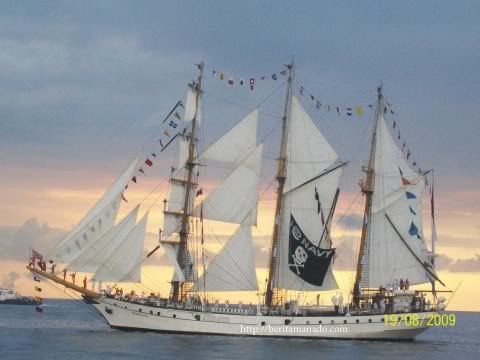
August 12 - 20, 2009, Manado, North Sulawesi, Indonesia.

Come and join in the international event Sail Bunaken 2009 for sharing new experience and exploring the marine beauty along with the marine lovers from all over the world in a spirit of adventure, graced by the marine paradise of Bunaken Sea.

Sail Bunaken 2009 offers various marine activities, including Indonesian Fleet Review, Yacht Rally, Bunaken Expo & Festival, International Big Game Fishing "KASAL CUP", Diving Competition & Festival, International Seafood Festival, and Bunaken Trans Equatouring Celebes 2009.

World Diving Record Broken at Sail Bunaken

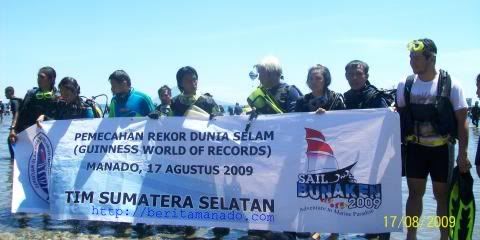
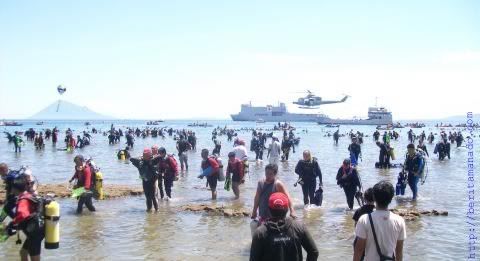
Nearly 3,000 divers set a world record Sunday for the largest group dive by plunging into the famed waters of Bunaken, North Sulawesi.

The information center of the Sail Bunaken 2009 committee said 2,818 people participated in the event, but only 2,805 people stayed underwater for at least 25 minutes. That is the minimum length of time required by the Guinness Book of Records, whose representatives were on hand to witness the new record.

Divers began entering the water at 8 in the morning. By midday, all of them had returned to shore. The mass dive also marked Indonesia's Independence Day, August 17. An Indonesian flag will be unfurled underwater as part of the independence celebrations.


Sail Bunaken 2009 is a momentum to restore the image of Indonesia, as the largest maritime event in the world. This event involving dozens of countries with a war ship and sailor. This is the largest maritime event in 21st that held Sailing and Flying Pass various ships and war planes, an activity that is rarely done in the world.

Sail Bunaken 2009 is jointly organized by the Ministry of Marine and Fishery Affairs, Provincial Administration of North Sulawesi, Ministry of Culture and Tourism, and Navy Force of Indonesia, supported by the Directorate General of Immigration and other government institutions.

There are two important issues related to implementation of the Sail Bunaken in North Sulawesi, which is the potential for marine biodiversity and resources of large, highly qualified converted to economic activity for the people. North Sulawesi province got momentum with a very prestigious event, so hopefully the local community able to support the activities. The natural beauty and marine diversity of Bunaken Sea Park in North Sulawesi have long been admired by marine lovers from all over the world, including divers, surfers, and tourists through to marine biodiversity researchers

Then, the Indonesian people can show the strength of defense and maritime security, so that it can not be regarded lightly by any country.

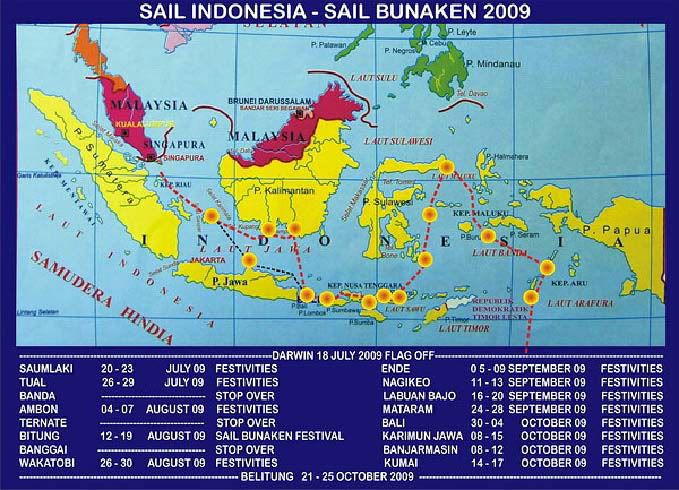
Route Sail Indonesia in Sail Bunaken 2009


Read More... “Sail Bunaken 2009”  »»

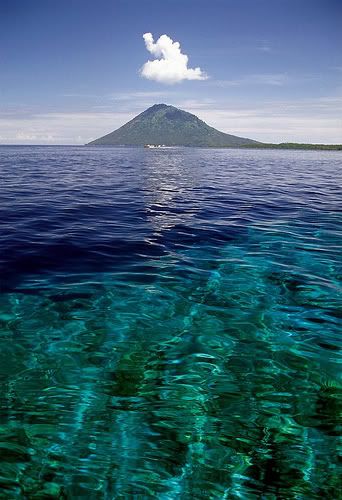
Bunaken is part of the Bunaken National Marine Park, which has some of the highest levels of marine biodiversity in the world. Bunaken is located at the north of the island of Sulawesi, Indonesia. It belongs administratively to the municipality of Manado.

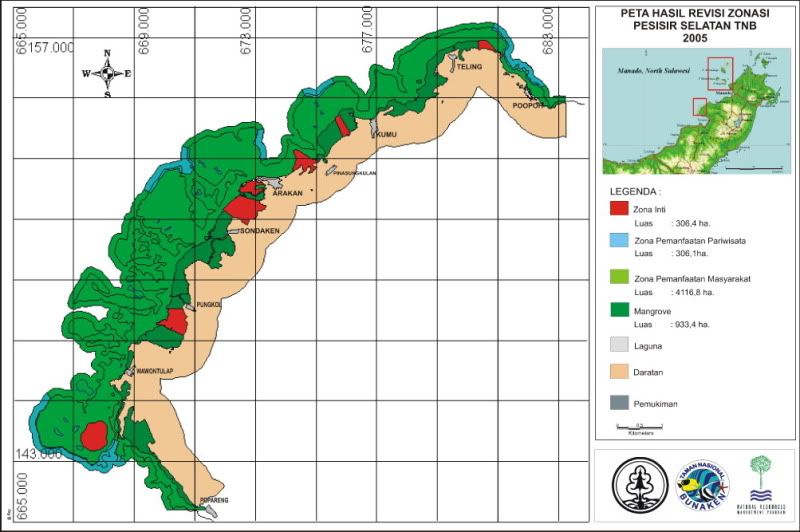
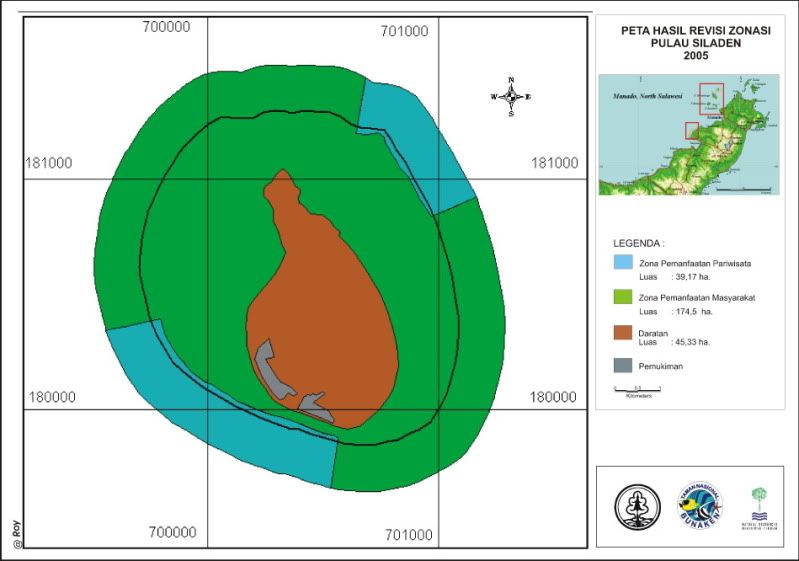
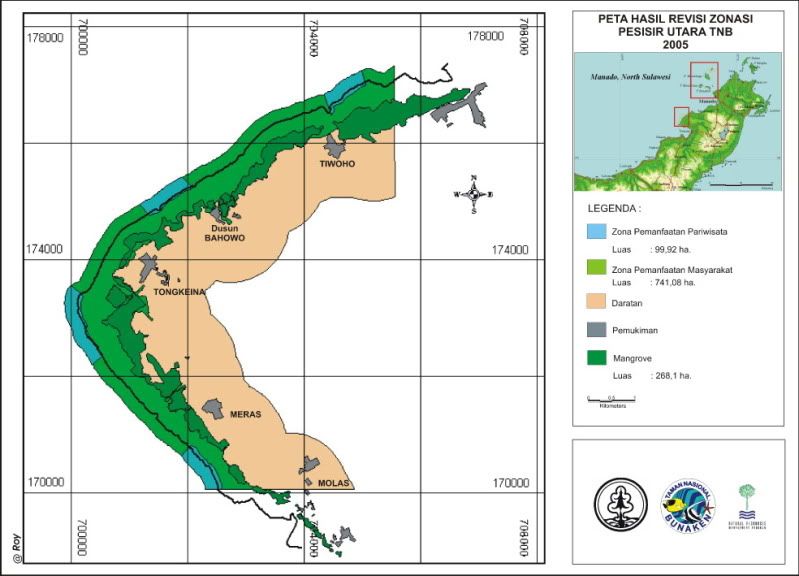
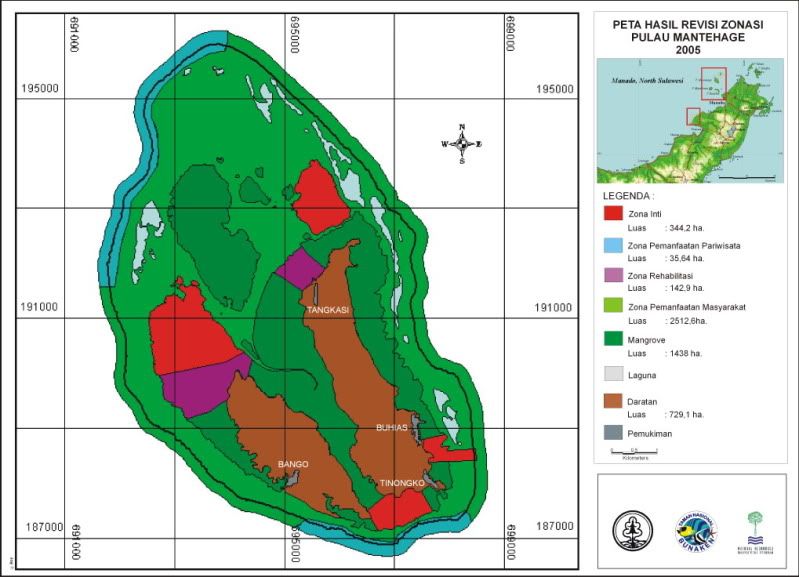
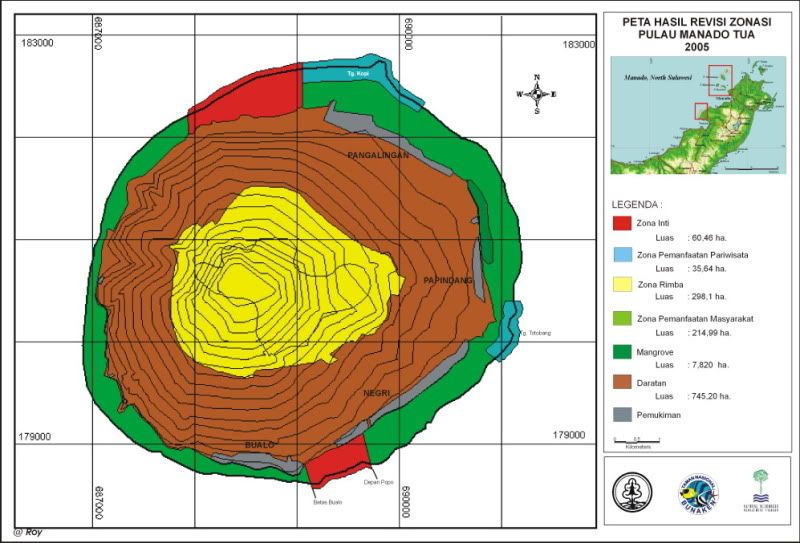
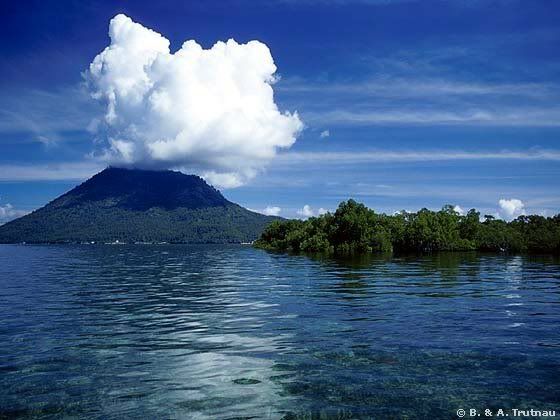
The Bunaken National Marine Park was formally established in 1991 and is among the first of Indonesia's growing system of marine parks. The park covers a total surface area of 890.65 km², 97% of which is overlain by sparkling clear, warm tropical water. The remaining 3% of the park is terrestrial, including the five islands of Bunaken, Manado Tua, Mantehage, Nain and Siladen. Although each of these islands has a special character, it is the aquatic ecosystem that attracts most naturalists. The Park consists of a northern and southern section. The northern section includes five islands, and the coastal area between Molas to Tiwoho called the “Molas-Wori Coast”. Thesouthern section consists entirely of coastal area between Poopoh and Popareng villages, called the “Arakan-Wawontulap Coast”.

The Environment and Biodiversity Condition
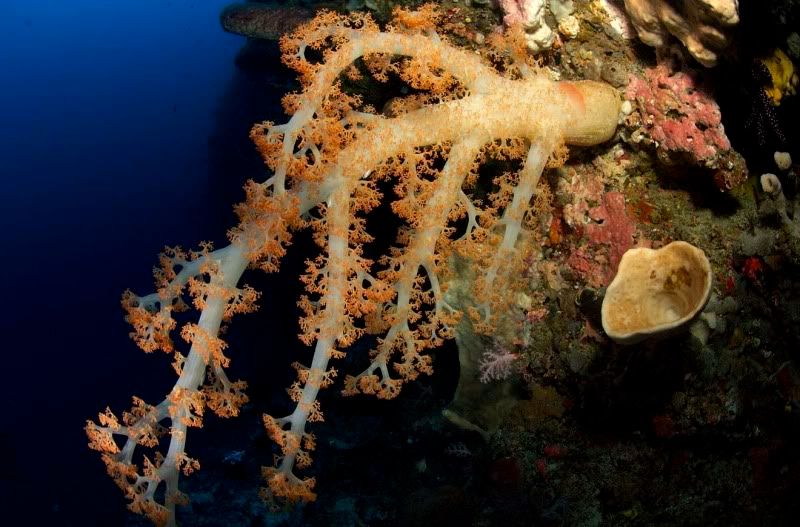
The waters of Bunaken National Marine Park are extremely deep (1566 m in Manado Bay), clear (up to 35-40 m visibility), refreshing in temperature (27 to 29 °C) Pick any of group of interest - corals, fish, echinoderms or sponges - and the number of families, genera or species is bound to be astonishingly high. For example, 7 of the 8 species of giant clams that occur in the world occur in Bunaken.

The park has around 70 genera of corals; compare this to a mere 10 in Hawaii. Although the exact number of fish species is unknown, it may be slightly higher than in the Philippines, where 2,500 species, or nearly 70% of all fish species known to the Indo-western Pacific, are found. A snorkler or diver in the vicinity of Lekuan or Fukui may spot over 33 species of butterfly fish and numerous types of groupers, damsels, wrasses and gobies. The gobies, smallish fish with bulging eyes and modified fins that allow them to attach to hard surfaces, are the most diverse but least known group of fish in the park

Biologists believe that the abundance of hard corals is crucial in maintaining the high levels of diversity in the park. Hard corals are the architects of the reefs, without them, numerous marine organisms would be homeless and hungry.

Bunaken Marine Park has become an important example of how Sulawesi, and the rest of Indonesia, can work to protect its natural resources.

Zonation Map.


Read More... “The Bunaken National Marine Park”  »»

Vote Komodo island for the new 7 wonders of the world.[clik here]

Komodo National Park includes three major islands: Komodo, Rinca and Padar, as well as numerous smaller islands creating a total surface area (marine and land) of 1817km (proposed extensions would bring the total surface area up to 2,321km2). As well as being home to the Komodo dragon, the Park provides refuge for many other notable terrestrial species such as the orange-footed scrub fowl, an endemic rat, and the Timor deer. Moreover, the Park includes one of the richest marine environments including coral reefs, mangroves, seagrass beds, seamounts, and semi-enclosed bays. These habitats harbor more than 1,000 species of fish, some 260 species of reef-building coral, and 70 species of sponges. Dugong, sharks, manta rays, at least 14 species of whales, dolphins, and sea turtles also make Komodo National Park their home.


Komodo National Park is located in the center of the Indonesian archipelago, between the islands of Sumbawa and Flores. Established in 1980, initially the main purpose of the Park was to conserve the unique Komodo dragon (Varanus komodoensis) and its habitat. However, over the years, the goals for the Park have expanded to protecting its entire biodiversity, both terrestrial and marine. In 1986, the Park was declared a World Heritage Site and a Man and Biosphere Reserve by UNESCO, both indications of the Park's biological importance.


Threats to terrestrial biodiversity include the increasing pressure on forest cover and water resources as the local human population has increased 800% over the past 60 years. In addition, the Timor deer population, the preferred prey source for the endangered Komodo dragon, is still being poached. Destructive fishing practices such as dynamite-, cyanide, and compressor fishing severely threaten the Park's marine resources by destroying both the habitat (coral reefs) and the resource itself (fish and invertebrate stocks). The present situation in the Park is characterized by reduced but continuing destructive fishing practices primarily by immigrant fishers, and high pressure on demersal stocks like lobsters, shellfish, groupers and napoleon wrasse. Pollution inputs, ranging from raw sewage to chemicals, are increasing and may pose a major threat in the future.


Today, the PKA Balai Taman Nasional Komodo and PT. Putri Naga Komodo are working together to protect the Park's vast resources. Our goals are to protect the Park's biodiversity (both marine and terrestrial) and the breeding stocks of commercial fishes for replenishment of surrounding fishing grounds. The main challenge is to reduce both threats to the resources and conflicts between incompatible activities. Both parties have a long term commitment to protecting the marine biodiversity of Komodo National Park.

Read More... “Indonesia's Komodo National Park”  »»

CO2 levels may already be too high for coral reefs to survive
Unless changes are made soon, our children may be the last generation who are able to see coral reefs and the wonderful wildlife that can be found living on them. Due to the combined effect of ocean acidification and ocean warming, coral reef survival is balancing on a knife edge, warns a meeting of leading scientists.
CO2 levels will be too high for coral reefs to survive

Organised by the Zoological Society of London (ZSL), the International Programme on the State of the Ocean (IPSO) and the Royal Society, the meeting identified the level of atmospheric CO2 predicted to result in the demise of coral reefs.

At anticipated rates of emission increase, it is expected that 450 ppm CO2 will be reached before 2050. At that point, corals may be on a path to extinction within a matter of decades. The safe level of CO2 that we should strive for is 320 ppm: 360 is now known to be the level at which reefs cease to be viable in the long term.

Mass coral bleaching events already happening
At today's CO2 level of 387 ppm, repeated cycles of coral death from mass bleaching have already sent most coral reefs into serious decline. By 2050, the remaining coral reefs could fall victim to ocean acidification. Such a catastrophe would not be confined to reefs, but could start of a domino-like sequence of the fall of other marine ecosystems.

Scientific evidence shows that we have long passed the point at which the marine environment offers reefs a guaranteed future. The kitchen is on fire and it's spreading round the house. If we act quickly and decisively we may be able to put it out before the damage becomes irreversible. That is where corals are now.

Now, there is every reason to believe that the oceans may in fact be the most vulnerable sector of our planet to climate change - with dire consequences for us all.Source WildlifeExtra

Read More... “Coral Reefs And Climate Change”  »»

The threat of climate change means that for the first time humanity is faced with the very real possibility of extinction. The root cause of the ecological crisis is capitalism’s drive to maximize immediate profits above all else.

The UN has estimated that the total cost of conserving tropical forests, reforesting the Earth to an environmentally healthy level, reversing desertification, developing renewable energy and implementing energy efficient practices is about the same as just a few months of global military spending.

This is only one example of why this system is profoundly at odds with a sustainable planet. The exploitation of nature is as fundamental to the profit system as the exploitation of workers. Capitalist economics treats the air, rivers, seas and soil as a “free gift of nature” to business. Most major companies aren’t quite so honest. The big polluters spend millions advertising themselves as “green”, while they continue to plunder the Earth to keep the shareholders happy.

The market system can’t help preserve the environment for future generations because it cannot take into account the long-term needs of people and planet. The competition between individual companies to make a profitable return on their investment excludes rational and sustainable planning.

This thirst for profit prevents pro-capitalist governments from responding rationally to the climate crisis — despite the immense scale of the threat.

Stopping climate change is impossible unless the profit motive is removed from the equation. The crisis poses a big choice. We can continue in the ways of capitalism and an inhabitable planet, or we can start down the democratic socialist path — a path of harmony with nature, grassroots democracy and respect for life.

Read More... “Capitalism kills the Earth”  »»

Thunnus is a genus of ocean-dwelling fish in the family Scombridae, all of which are tuna, although other tuna species are found in other genera. The name of the genus is the Latinized form of the Greek θύννος, thýnnos, tuna, the word being first mentioned in Homer. There are eight species:

* Albacore, Thunnus alalunga (Bonnaterre, 1788).
* Bigeye tuna, Thunnus obesus (Lowe, 1839).
* Blackfin tuna, Thunnus atlanticus (Lesson, 1831).
* Pacific bluefin tuna, Thunnus orientalis (Temminck & Schlegel, 1844).
* Northern bluefin tuna, Thunnus thynnus (Linnaeus, 1758).
* Southern bluefin tuna, Thunnus maccoyii (Castelnau, 1872).
* Longtail tuna, Thunnus tonggol (Bleeker, 1851).
* Yellowfin tuna, Thunnus albacares (Bonnaterre, 1788).


ALBACORE

The albacore, Thunnus alalunga, is a type of tuna in the family Scombridae. This species is also called albacore fish, albacore tuna, longfin, albies, pigfish, tombo ahi, binnaga, Pacific albacore, German bonito (but see bonito), longfin tuna, longfin tunny, or even just tuna. It is the only tuna species which may be marketed as "white meat tuna" in the United States.

It is found in the open waters of all tropical and temperate oceans, and the Mediterranean Sea. Lengths range up to 140 cm and weights up to 45 kg.

The pectoral fins of the albacore are very long, as much as 50% of the total length. The dorsal spines are 8 to 10 in number, and well forward of the rays of the dorsal fin. The anterior spines are much longer, giving a concave outline to the spiny part of the dorsal fin.

Albacore is a prized food, and the albacore fishery is economically significant. Methods of fishing include pole and line, long-line fishing, trolling, and some purse seining. It is also sought after by sport fishers.

The National Scientific Committee (NSC) conducts regularly scheduled stock assessments of Pacific albacore. The 2003 stock assessment found the albacore stocks to be at or near record highs. The North and South Pacific albacore stocks are not over fished. The ISC findings are accepted by the Inter-American Tropical Tuna Commission and the Western Central Pacific Fisheries Commission and employed in the responsible management of Pacific albacore tuna stocks. Regrettably, the same cannot be said for Atlantic stocks of albacore. Assessments of the North and South Atlantic stocks showed them to be vulnerable and critically endangered respectively, due to significant population reductions measured through an index of abundance and considering "actual or potential levels of exploitation".

SeaChoice ranks albacore as a "best choice" for consumers, although notes some "moderate concerns" regarding the management effectiveness (in particular, no definitive survey of the albacore stock of the Indian Ocean fishery has taken place), and "moderate concern" over the fishing stock, especially regarding the North Atlantic albacore population, which the National Marine Fisheries Service (NMFS) considers overfished with overfishing still occurring. The southern Atlantic stock is not considered overfished. The North Pacific and South Pacific albacore stocks are not overfished and not experiencing overfishing.

Consumers are increasingly concerned about the sustainability of fisheries. A number of programs have been developed to help consumers identify and support responsible and sustainable fisheries. Perhaps the most widely accepted of these programs is that of the Marine Stewardship Council (MSC). The MSC declared the U.S. North and South Pacific albacore pole & line and troll fisheries ("pole & troll") as the only certified sustainable tuna fisheries in the world. Products from MSC certified sustainable fisheries are readily identifiable by the MSC's distinctive blue and white "eco-label".

By purchasing products bearing the MSC eco-label, consumers express their support for sustainable fisheries and encourage the use of sound fishing methods that promote the future health and abundance of ocean ecosystems.

In some parts of the world, other species may be called "albacore":

1. Blackfin tuna (albacore) - Thunnus atlanticus;
2. Yellowfin tuna (albacore, autumn albacore, yellowfinned albacore) - Thunnus albacares;
3. Yellowtail amberjack (albacore) - Seriola lalandi;
4. Kawakawa (false albacore) - Euthynnus affinis;
5. Little tunny (false albacore) - Euthynnus alletteratus.

BIGEYE TUNA

The bigeye tuna, Thunnus obesus, is an important food fish and highly sought after recreational game fish. It is a member of the true tunas of the genus Thunnus. Bigeye tuna are found in the open waters of all tropical and temperate oceans, but not the Mediterranean Sea. Its length is between 60 and 250 cm (23 and 93 inches). Maximum weight probably exceeds 400 lb with the all-tackle angling record standing at 392 lbs. Bigeye tuna are large deep-bodied streamlined fish with large heads and eyes. The pectoral fins are very long, reaching back as far as the second dorsal fin. There are 13 or 14 dorsal spines.

A longer-lived fish than the closely related yellowfin tuna, the bigeye tuna is thought to have a lifespan of up to 10 to 12 years, with individuals achieving sexual maturity at the age of four. Spawning has been recorded as taking place in June and July in the northwestern tropical Atlantic and in January and February in the Gulf of Guinea in the eastern Atlantic, which is, so far, the only known nursery area for Atlantic bigeye tuna.

Feed items include both epipelagic and mesopelagic species, with deep diving behaviour during the day thought to be related to the seeking of prey. Satellite tagging has shown that bigeye tuna often spend prolonged periods cruising deep below the surface during the daytime, sometimes making dives as deep as 500 metres. These movements are thought to be in response to the vertical migrations of prey organisms in the deep scattering layer.

Physiological adaptations to foraging in these cold (bigeye tuna have been tracked entering water as cold as 5 degrees Celsius) and oxygen-poor subsurface waters include blood that is highly efficient in extracting oxygen from the water even in oxygen-poor conditions, and vision that is highly adapted for effective function in low light conditions. The heart of bigeye tuna also has an unusual ability to function effectively at the low ambient temperatures encountered while foraging in cold subsurface water. Nonetheless, bigeye tuna must make return trips to warmer surface waters to warm themselves up.

Bigeye tuna are amongst the tuna species most threatened by overfishing. Juvenile bigeye tuna associate closely with floating objects such as logs, buoys and other flotsam, which makes them extremely susceptible to purse seine fishing in conjunction with man-made FADs (Fish Aggregation Devices). Bigeye mature at a later age than other commercially important tuna species such as skipjack and yellowfin tuna, and the removal of large numbers of juvenile bigeye before they reach breeding age is a major concern to fisheries managers, scientists and sport fishermen.

NORTHERN BLUEFIN TUNA

The northern bluefin tuna (Thunnus thynnus), or giant bluefin tuna, is a species of tuna native to both the western and eastern Atlantic Ocean, as well as the Mediterranean Sea and the Black Sea. Although not native to the Pacific Ocean, the species is now commercially cultivated off the Japanese coast. The species was in the past called the common tunny. It is often referred to simply as the "bluefin" or "bluefin tuna", but this name is ambiguous as it is also sometimes used for the southern bluefin tuna (Thunnus maccoyii) and the Pacific bluefin tuna (T. orientalis).

The body of the northern bluefin tuna is cigar-shaped and robust. Northern bluefin tuna can live for 30 years. Due to overfishing of this species, few known specimens grow to a mature age and typical specimens average 2-2.5 m (6.5-7 ft) long and around 350 kg (770 lb) in weight. The species can reach a maximum length of about 4.3 m (14 ft) and 680 kg (1,496 lb), the largest recorded. Northern bluefin tuna can easily be distinguished from other members of the tuna family by the relatively short length of their pectoral fins.

The northern bluefin tuna typically hunts small fish and invertebrates such as sardines, herring, mackerel, squid and crustaceans.

Bluefin tuna are caught by sports fishermen using heavy-duty rod and reels and by commercial fishermen using purse seine gear.

The northern bluefin tuna is an important source of seafood, providing most of the tuna used in sushi. To supply sushi markets, the bluefin tuna is reported to be fished at 4 times the sustainable rate. As a result, some fisheries of bluefin are considered overfished, and this problem is compounded by the bluefin's slow growth rate and late maturity. The Atlantic population of the species has declined by nearly 90 percent since the 1970s. The species is currently classified as data deficient, unlike the southern bluefin tuna which is critically endangered. Consumers have been recommended to avoid consumption of bluefin tuna until stocks recover.

SOUTHERN BLUEFIN TUNA

The southern bluefin tuna, Thunnus maccoyii, is a tuna of the family Scombridae found in open southern hemisphere waters of all the worlds oceans mainly between 30°S and 50°S, to nearly 60°S. The southern bluefin tuna is a large streamlined fast swimming fish with a long slender caudal peduncle and relatively short dorsal, pectoral and anal fins. At up to 2.5 m (8.2 ft) and weighing up to 400 kg (882 lbs) it is one of the largest bony fishes. The body is completely covered in small scales. The body color is blue-black on the back and silver-white on the flanks and belly, with bright yellow caudal keels in adult specimens. The first dorsal fin color is grey with a yellow tinge, the second dorsal is red-brown, and the finlets are yellow with a darker border.

The southern bluefin tuna is an opportunistic feeder, preying on a wide variety of fishes, crustaceans, cephalopods, salps, and other marine animals.

The southern bluefin tuna is classified as Critically Endangered on the IUCN Red List of Threatened Species. Since the 1950s, when industrial fishing commenced, the total population of southern bluefin tuna has declined by about 92 percent.

In 1994 the then existing voluntary management arrangement between Australia, Japan and New Zealand was formalised when the Convention for the Conservation of Southern Bluefin Tuna came into force. The Convention created the Commission for the Conservation of Southern Bluefin Tuna (CCSBT). Its objective is to ensure, through appropriate management, the conservation and optimum utilisation of the global southern bluefin tuna fishery. Later, South Korea, Taiwan and the Philippines have joined, or are cooperating with, the Commission. The CCSBT is headquartered in Canberra, Australia.

YELLOWFIN TUNA


The yellowfin tuna (Thunnus albacares) is a type of tuna found in open waters of tropical and subtropical seas worldwide. Also known as ahi tuna, from its Hawaiian name ‘ahi, yellowfin is becoming a popular replacement for the severely depleted supplies of Southern bluefin tuna. It is an epipelagic fish ranging in the top 100 m (330 feet) of the water column. Reported sizes have ranged
as high as 239 cm (94 inches) in length and 200 kg (440 lb) in weight. The second dorsal fin and the anal fin are both bright yellow, thus the common name, and can be very long in mature specimens, as are the pectoral fins. The main body is very dark metallic blue, changing to silver on the belly, which has about 20 vertical lines.

Yellowfins tend to school with fishes of the same size, including other species of tuna, and larger fish. They are often seen with dolphins, porpoises, whales and whale sharks. Yellowfins eat other fish, crustaceans, and squid.

Recent studies proved that this species is endangered. Especially in the Mediterranean sea, due to over fishing serving commercial interests regardless of high concern from the scientific and environmental community. The extinction of the "yellowfin (ahi) tuna" could occur in the next 15 years if governments don't take serious measures to protect the specie by lowering the fishing quotas tremendously and by reacting to illegal fishing.

Commercial fisheries catch yellowfin tuna with encircling nets (purse seines) and with longlines. The fish are mainly sold in frozen or canned form, but are also popular as sashimi. Otherwise Yellowfin tuna are a popular sport fish in many parts of their range and are prized for their speed and strength when fought on rod and reel as well as for their table qualities. References http://wikipedia.org

Read More... “TUNA, THE MOST HUNTED FISH IN THE WORLD”  »»

The location of Indonesia Ocean in equator region with tropical climate caused its have much potential fisheries resource. This condition make consequential to fishing gears and technologies development. There are number of fishing gears for marine fish and shrimp in Indonesia that category into 10 types.

1.Shrimp Nets /Trawl (Pukat Udang)
There are 3 types of shrimp nets according to the opening of the trawl mouth: Otter trawl, Beam trawl and Paranzella. The fishing ground of the trawl is Arafuru Sea and Banda Sea to capture shrimps like Penaeus monodon, Penaeus merguensis, Metapenaeus ensis and Parapenaeus spp.

2.Seine Nets (Pukat Kantong)
The design of Seine nets has 3 main part: bag, body, and leg/wing. There are many kinds of seine net: Lampara (payang), Beach Seine (pukat pantai), Dogol. The fishing ground of the gear is in around of Indonesia Ocean especially in Jawa Sea and Sumatera coastal. Capture pelagic and demersal fish and shrimps like Enthynnus spp (tongkol), Rastregiller sp (kembung), and Sardinella fimbriata (lemuru).

3.Purse Seine (Pukat Cincin)
The design of purse seine has ring located in purse line to make the bag in the end of the operation in oerder the fish can’t trough away from the nets. The fishing ground of the gears is Java Sea and Sumatera coastal. The dominan cathcs is pelagic fish like Enthynnus spp (tongkol), Rastregiller sp (kembung), Katsuwonus pelagic (cakalang), and Sardinella fimbriata (lemuru).

4.Gill Nets (Jaring Insang)
The design of gill net according to this operational: Drift gill net (jaring Insang hanyut), Set gill net (Jaring insang labuh), Encircling gill net (jaring ingsang lingkar), and Trammel Net. The fishing ground of the gears is coastal and coral in around Indonesia Sea. The dominant capture is pelagic and demersal fish and shrimps like Sceinedae (tiga waja), Formio niger (bawal hitam), Pampus argentus (bawal putih), Lates calcalifer (kakap), Serranidae (kerapu) and many kinds of shrimps.

5.Lift Nets (Jaring Angkat)
Lift nets is one of the fishing gears which the operational of the gear with vertical dropping and lifting the gears. There are 7 types of the lift nets: Bagang (bagan), Dip nets/Scoop (Serok), Crab lift nets (jaring rajungan/kepiting), lift net (Bondong), Four boots lift net (Soma cang), and Cross lift (anco). The fishing ground of the lift nets is around of the Indonesia Ocean especially in Makasar Sea and many rivers. The dominant capture is small pelagic fish like Stolepharus spp and molussca like loligo spp, Sepia spp, and Octopus spp.

6.Hook and Lines (Pancing)
The design of the gears is made of 2 main components: hooks (mata pancing) and line (tali pancing). There are many types of the hook and line: Longline (rawai tuna), Pole and line /Huhate (pancing cakalang), Troll line (pancing tonda), and Hand line (pancing ulur). The fishing ground of the gears is in Indian Ocean (Northern Java and Sumatera Island) and Pacific Ocean (Southern Sulawesi and Papua Island). The dominant capture is Thunus spp, Katsuwonus pelamis, Scomberomorus comersoni, Sphyraena spp, and Priacanthus spp.

7.Traps (Perangkap)
The main principle of the operation of the gears is setting permanently in the water and attracting the fish to enter the gears. There are many types of the gears: Fish pots (bubu), Half circling traps (Perangkap setengah lingkaran), Stake traps (Sero), and Tidal traps (perangkap pasang surut). The fishing ground of the gears including rivers, lakes, estuaries, mangroves, coral reefs and open seas. The main capture is many kinds of crustacean like Portunus spp, Scylla serata, and Panulirus spp.

8.Drive in Nets
The operational of the drive in nets like traps. The difference of the gears is made from nets with large scale of body and bag. This gear usually is operated in coral reef areas to capture many kinds of coral fish. This gear has 6 types: Muroami, Soma malalugis, Jaring kalase, Jaring klotok, Lari-larian and Jaring Saden.

9.Shell fish and Sea Weeds Collection (Alat pengumpul kerang dan rumput laut)

10.The Others Fishing Gears
There are much fishing gears that uncategorized into nine types of gears. This condition is according the need of fisherman, topography of the sea, resources. The gears are Encircling nets, rake, cover nets, harpoon, rifle, bow, arrow, and etc.

Read More... “Indonesia Fishing Gear Categories”  »»

Preview on Feedage: green-ocean Add to My Yahoo! Add to Google! Add to AOL! Add to MSN
Subscribe in NewsGator Online Add to Netvibes Subscribe in Pakeflakes Subscribe in Bloglines Add to Alesti RSS Reader
Add to RSS Web Reader Add to NewsBurst Add to meta RSS Add to Windows Live
Rojo RSS reader iPing-it Add to Feedage RSS Alerts